Skip to content
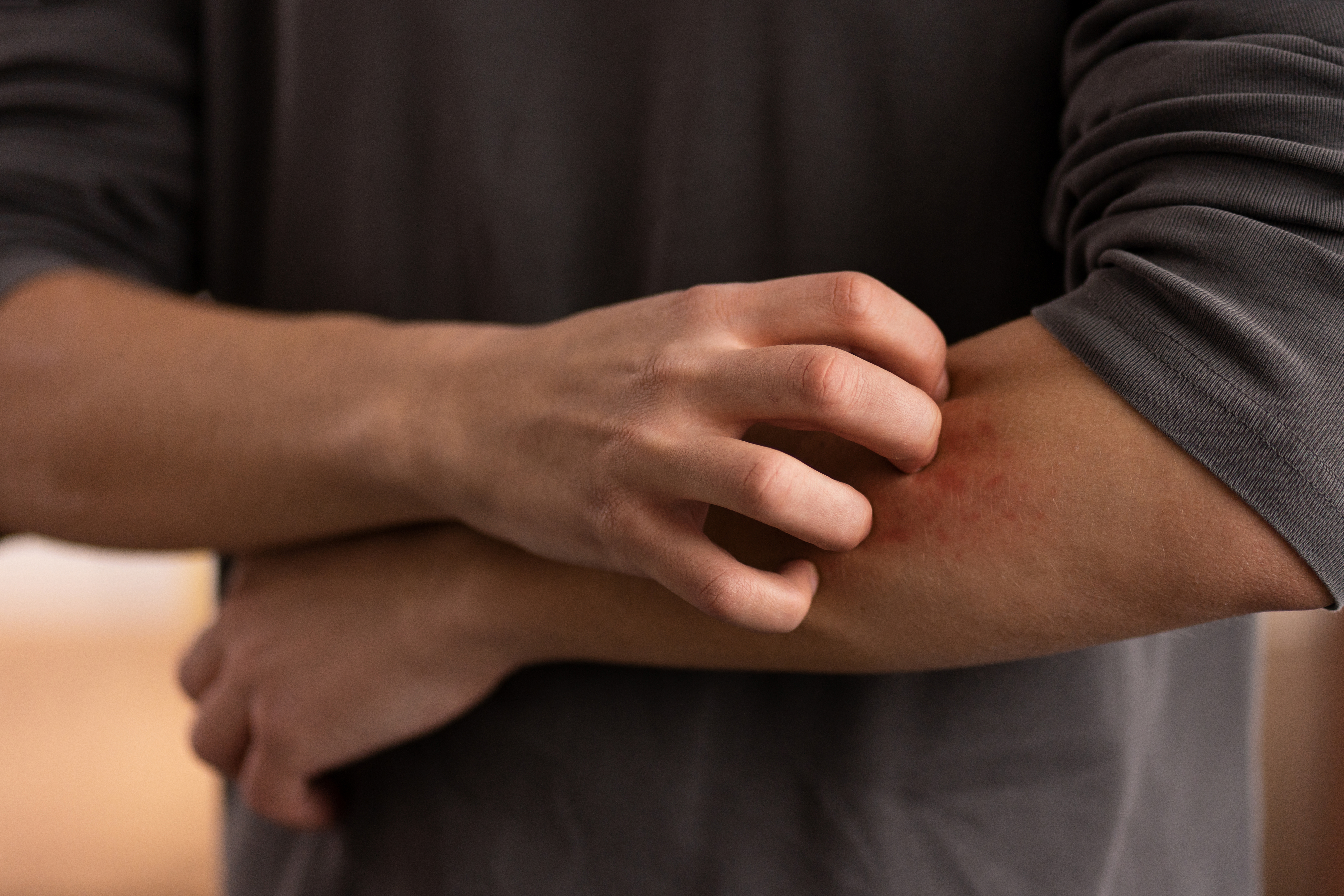
You spent the weekend outside, and now something on your skin is red and itchy. Your first thought is sunburn. But sunburn is usually easy to spot, and this doesn’t look quite right.
Summer skin rashes are common in Corpus Christi, and plenty of them have nothing to do with the sun. Heat, sweat, salt water, chlorine, plants, and bugs all leave their mark. Here’s a general look at what shows up around the Coastal Bend in July, and when a rash is worth having someone look at.
What Causes Summer Skin Rashes Besides Sunburn?
Most summer skin rashes come from four things: trapped sweat, friction, something your skin touched, or something in the water. South Texas living supplies all four.
Corpus Christi summers are hot and humid, so your skin stays damp for hours at a time. Damp skin is more fragile than dry skin. It sticks to clothing and holds onto whatever it touches. Add long days at the beach, in the pool, or in the yard, and you have the setup for most of the rashes we see this time of year. Most of these reactions are minor and short-lived. The tricky part is that several of them look alike, and a few can turn into something that needs attention.
Heat Rash: The Most Common Summer Culprit
Heat rash happens when sweat gets trapped under the skin instead of evaporating. According to the Mayo Clinic, it shows up when the ducts leading from your sweat glands to the surface get blocked or inflamed, and it tends to appear in skin folds and anywhere clothing rubs. That description fits a Corpus Christi summer perfectly. Ninety-degree heat, high humidity, and a shirt that’s been damp since 10 in the morning don’t give sweat much chance to evaporate.
Adults usually notice it under waistbands, along the bra line, or on the neck. Babies and toddlers tend to get it on the neck, chest, and shoulders, which is why it turns up after a long stroller walk. Keeping skin cool, dry, and in loose clothing will help, and heat rash often settles down once the skin gets a break.
Remember that heat rash and heat exhaustion are not the same thing. One is a skin reaction, while the other is a whole-body warning sign that needs a more serious response.
Can Sweat and Friction Alone Cause a Rash?
Yes. Sweat and friction together are enough to irritate skin, no sunburn or bug required.
Anyone who’s walked the beach in wet swim trunks knows the feeling. Skin rubs against skin or fabric, moisture keeps it from sliding cleanly, and the surface gets raw. It shows up in skin folds, along the inner thighs, and under the arms. Staying in a wet swimsuit long after you’ve left the water makes it worse.
Rinsing off, changing into dry clothes, and letting the skin breathe usually go a long way. If an irritated area spreads or gets more painful instead of less, have it looked at. Our post on everyday skin irritation covers more routine causes that show up year-round.
Rashes That Come From the Water
Swimming can leave you with a rash, and the cause depends largely on where you swam.
Pools and hot tubs come with their own issue. The CDC describes hot tub rash as an itchy, bumpy rash that can develop when contaminated water sits against the skin for a long stretch. It’s often worse where a swimsuit holds water against the body, which is a good argument for showering and changing sooner rather than later.
Open water is a different story. The CDC also describes swimmer’s itch, an allergic skin reaction to microscopic parasites found in fresh and salt water, which usually appears as small, itchy bumps on exposed skin. Locals may also know sea bather’s eruption, sometimes called sea lice, which involves tiny marine larvae and tends to show up under a swimsuit rather than on bare skin.
None of this means you should stay out of the Gulf. Rinsing off after a swim, drying thoroughly, and changing out of wet swimwear are simple habits that lower the odds. If a beach day leaves you with something that stings rather than itches, our guide to jellyfish stings and other beach injuries is a better starting point.
Plants, Products, and Contact Reactions
Some summer rashes come from something your skin touched. Yard work is a classic trigger, and so is a new skincare product.
Poison ivy grows abundantly in South Texas, and not just deep in the woods. It turns up along fence lines, in overgrown corners of the yard, and in brushy areas near drainage ditches. Plenty of people meet it for the first time while clearing brush on a Saturday morning.
New product sensitivity can cause a rash, too. Sunscreens, insect repellents, moisturizers, and new detergents can all irritate skin or trigger a reaction. That’s not a reason to skip sun protection—sunscreen still matters, here in Texas even more than in most places. It’s just a reason to note what’s new in your routine when a rash appears.
Bites, Stings, and Bumps You Didn’t See Coming
Mosquitoes, fire ants, chiggers, and ticks are all part of summer in the Coastal Bend, and each leaves the skin looking a little different.
- Mosquito bites tend to be scattered.
- Chigger bites often cluster where clothing fits snugly.
- Tick bites can be easy to miss altogether.
Most bites are a nuisance and nothing more. What deserves special attention is a bite that keeps growing, develops a spreading red area, or comes with a fever. Trouble breathing, swelling of the face or throat, or lightheadedness are all part of an emergency. Call 911 right away.
When Should a Summer Rash Be Checked Out?
Any rash you’re unsure about is worth getting evaluated.
A few situations make a visit more clearly worthwhile: spreading redness, warmth, swelling, drainage, or pain that worsens after the first day or two can point toward infection. So can a fever developing alongside the rash. A rash that covers a large part of the body, blisters, involves the face, or refuses to improve after several days is also worth evaluating. You should also have a professional look at any rash in an infant or in someone with a weakened immune system.
Any rash paired with difficulty breathing, facial swelling, confusion, or a rapidly spreading area of red skin is an emergency, not an urgent care visit. Go to the nearest emergency room.
Urgent Care for Summer Rashes in Corpus Christi
Summer skin rashes are hard to sort out on your own. Heat rash, contact reactions, water-related rashes, and bites can look remarkably similar in the mirror.
Access Total Care offers convenient urgent care services for individuals and families in Corpus Christi. If a rash appears after a weekend outside and you’re not sure what you’re looking at, Access Total Care in Corpus Christi can help. Visit our Padre Island location for friendly staff and quick care, so you can get back to enjoying your summer.
Summer Skin Rash FAQ
How do I know if it’s a rash or a sunburn?
Sunburn shows up on exposed skin, appears within hours, and covers a broad, even area. A rash is more likely to be bumpy, itchy, patchy, or located where the sun never reached, like under a swimsuit or in a skin fold. If the sun couldn’t get to it, sunburn probably isn’t the answer.
Why do I get a rash after swimming in the Gulf?
Salt water, sand, and a wet swimsuit sitting against your skin can all irritate it, and reactions like swimmer’s itch and sea bather’s eruption are possible as well. Rinsing off and changing out of wet swimwear is the simplest way to lower the risk.
Can a heat rash turn into something worse?
It can. The main concern is a secondary skin infection, which is why spreading redness, worsening pain, or a fever alongside a rash should be evaluated rather than left to resolve at home.
How long should I wait before getting a rash looked at?
If a rash is mild and improving, it’s reasonable to watch it for a few days. If it’s spreading, getting more painful, blistering, coming with a fever, or not improving, it’s time to be seen. You can also contact us with questions before you come in.